Choosing a lithium battery supplier in China requires more than comparing prices and capacity figures. Buyers must examine manufacturing records, cell chemistry, testing procedures, traceability, and after-sales support. A polished website cannot prove consistent quality. Factory audits, sample testing, and verified certifications provide stronger evidence.
So, are lithium batteries safe to use? In most properly designed applications, they can be safe when produced, installed, charged, and stored correctly. However, safety depends on the entire battery system, not only the cells. A reliable supplier should explain its battery management system, thermal protection, balancing method, enclosure design, and quality-control process. Ask how rejected cells are handled. Ask whether production batches can be traced.
Real-world details matter. A battery may power an electric vehicle on a hot afternoon, sit in a warehouse during winter, or face vibration during shipping. These conditions expose weaknesses that a laboratory demonstration may not show. Independent inspection and testing can reveal loose connections, uneven cells, poor insulation, or inaccurate capacity claims. They also create useful records if problems appear later.
China has many experienced battery manufacturers, but quality varies between suppliers and factories. Some companies provide excellent engineering support. Others rely heavily on outside assembly, which may complicate accountability. I would not treat any supplier as safe based on location alone. The sensible approach is careful verification, clear technical specifications, and ongoing monitoring. Even then, no battery system is risk-free. Good decisions leave room for doubt, inspection, and improvement.
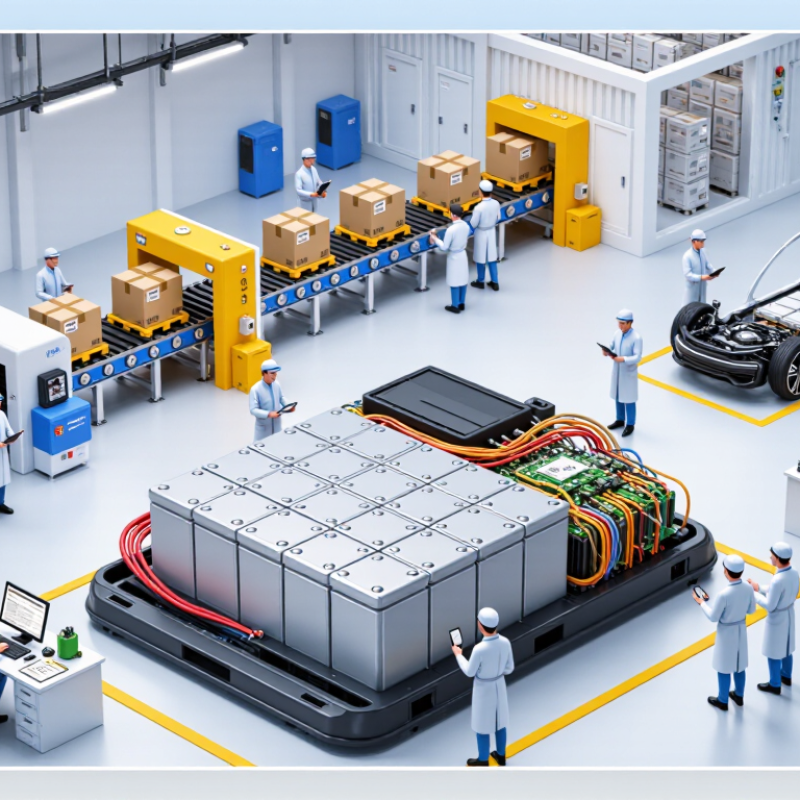
China’s lithium battery industry now sits at the center of the global energy transition. According to the International Energy Agency’s Global EV Outlook 2024, China produced about 80% of the world’s battery cells in 2023. It also controls most cathode and anode material processing. This concentration lowers costs and speeds production, but it creates supply-chain dependence.
Safety is not guaranteed by country of origin. It depends on cell consistency, electrolyte handling, thermal management, and quality inspection. The IEA’s Global Critical Minerals Outlook 2024 reports that China performs over 80% of global battery-grade graphite processing. That matters because anode quality affects charging stability and battery life. A serious buyer should request test records, batch traceability, capacity data, and evidence of compliance with standards such as IEC 62133-2 or UN 38.3 transport testing.
Look closely at the battery management system. It should monitor voltage, temperature, current, and abnormal charging behavior. Physical details also matter: clean welds, protected terminals, firm cell spacing, and undamaged insulation. Independent laboratory testing is more convincing than attractive factory photographs. Some suppliers provide excellent engineering; others may offer incomplete documentation. That is an uncomfortable distinction. I would not approve a battery solely because its cells were made in China, nor reject it for that reason. Reliable decisions require verified records, sample testing, and realistic operating conditions.
China remains central to the global lithium battery supply chain. The International Energy Agency’s Global EV Outlook 2024 reports that China held about 85% of global battery cell manufacturing capacity in 2023. That scale can support competitive prices and faster production. It does not automatically prove safety.
Evaluate suppliers through evidence, not factory photos. Request recent test reports for IEC 62619, IEC 62133-2, and UN 38.3 requirements. Verify each report with the issuing laboratory. Check cell traceability, incoming-material controls, production records, and failure-rate data. BloombergNEF’s 2024 Battery Price Survey recorded an average global pack price of 115 dollars per kilowatt-hour. Very low quotations deserve careful questions. They may reflect efficiency, or weaker controls.
Tips: Ask for a sample batch before signing a large order. Use independent pre-shipment inspections. Compare capacity, internal resistance, thermal behavior, and cycle-life results. Review warranty exclusions in plain language. A polished audit can still miss hidden process changes. Keep retention samples from every shipment. Small details matter. Suppliers should explain corrective actions, not only display certificates. The evaluation remains imperfect, especially when test conditions differ from field use. That limitation should be recorded honestly.
Lithium battery safety begins long before a cell enters a device. Reliable suppliers inspect incoming materials, verify cell capacity, and record production batches. They also control moisture, dust, and temperature inside assembly areas. A small contamination issue can increase internal resistance and heat. Quality teams test cells for overcharge, short circuit, vibration, impact, and abnormal temperature conditions. These tests should follow recognized international safety requirements.
A battery management system monitors voltage, current, and temperature during use. It can disconnect charging when limits become unsafe. However, software alone cannot repair poor cell matching or weak welding. Suppliers should use automated inspection for connections and sample checks for insulation. I have found that traceability matters during factory audits. Each battery should connect to records showing its materials, test results, and production date. This makes recalls faster and investigations more credible.
Packaging and transport require separate controls. Batteries need protection against movement, moisture, and accidental contact between terminals. Suppliers should provide clear handling instructions and realistic safety data. Warning signs deserve attention. A swollen cell, unusual smell, or rapid heating requires immediate isolation by trained personnel. No audit is perfect. Smaller suppliers may also have strong technicians but weaker documentation. Buyers should review test reports, factory procedures, warranty terms, and response times instead of trusting certificates alone. A quiet warehouse does not prove a safe battery.
China’s lithium battery suppliers can be safe to use when their quality systems are verified, not merely advertised. Look for current certificates covering battery safety, transport, and manufacturing management. Common evidence includes UN 38.3 test records, IEC 62133 reports, and ISO 9001 quality certification. Check the certificate holder, model number, test date, and issuing laboratory. A certificate for one cell does not automatically cover an entire battery pack.
Professional testing should examine overcharge, short circuit, vibration, temperature changes, and mechanical impact. Ask for recent reports from an accredited laboratory. Then compare the report with the actual product. Inspect sample cells, weld points, insulation, labels, and battery management settings. I have found that small details often reveal larger process weaknesses. A clean casing means little if capacity results vary widely between samples. Supplier audits, incoming inspection records, and traceable batch numbers provide stronger evidence.
Tips: Request three production samples, not one. Record voltage, capacity, weight, and charging temperature. Repeat the checks after storage. Ask how rejected cells are controlled. Do not accept edited screenshots as complete proof. Some suppliers may provide valid documents, yet their factory practice can change later. Independent verification remains wise, especially for large orders. A practical review should also include packaging quality, response time, warranty terms, and clear handling instructions. Perfect documentation is rare, so question gaps instead of ignoring them.
UN 38.3 defines eight transport-safety tests for lithium cells and batteries: altitude simulation, thermal test, vibration, shock, external short circuit, impact or crush, overcharge, and forced discharge. A certificate should be checked against the exact cell or battery model, revision, test report, and issuing laboratory. UN 38.3 compliance alone does not replace product-level safety certification such as IEC 62133-2 or IEC 62619.
China’s lithium battery suppliers can be safe to use when purchasing decisions follow evidence, not low prices. The International Energy Agency reported that global battery pack prices fell 14% in 2023. Lower prices can improve access, but they may also hide weaker testing or after-sales support. Ask suppliers for recent IEC 62619 safety reports, UN 38.3 transport test records, cell traceability, and warranty terms. Verify the documents with an independent laboratory when possible. A professional supplier should explain capacity, cycle life, operating temperature, and protection settings clearly. Vague answers are warning signs.
Safe installation requires matching the battery, charger, inverter, cables, and enclosure. Do not mix incompatible voltage systems. Install batteries in a dry, ventilated location, away from direct heat and combustible materials. The National Fire Protection Association highlights thermal runaway as a major battery fire concern. A qualified installer should check torque, insulation, grounding, fuses, and emergency isolation. I have seen small connection errors create serious heat. Installation guides are useful, but they are not a substitute for inspection.
Tips: Photograph the battery label and wiring before use. Keep a written charging record. Stop using the unit if it swells, smells unusual, leaks, overheats, or makes unfamiliar sounds. Never cover ventilation openings. The U.S. Consumer Product Safety Commission advises using compatible chargers and following manufacturer instructions. I would also schedule a yearly inspection, although many users neglect this simple step. Safety depends on both supplier quality and daily habits.
China produced about 80% of global battery cells in 2023. It also processes much of the cathode, anode, and graphite materials. This scale can reduce costs and shorten production schedules. Dependence remains a weakness.
No. Safety depends on cell consistency, insulation, welding, electrolyte handling, and thermal management. A battery made elsewhere can also fail. Origin is only one detail.
Request recent safety reports, capacity records, batch traceability, and transport-test evidence. Verify reports directly with the issuing laboratory. Ask for failure-rate data and corrective-action records. Certificates alone are not enough.
Look for clean welds, protected terminals, firm cell spacing, and undamaged insulation. Check labels and production dates. Watch for loose connections or crushed casing. Small defects matter.
It monitors voltage, current, temperature, and abnormal charging behavior. It can stop charging when conditions become dangerous. Software cannot fix poor cells or weak welds. That limitation is easy to forget.
Traceability links each battery to materials, test results, and production dates. It supports faster investigations and more focused recalls. Keep retention samples from every shipment. Records may still be incomplete.
Order a sample batch first. Compare capacity, internal resistance, thermal behavior, and cycle-life results. Use independent laboratory testing and pre-shipment inspection. Factory photographs prove very little.
Low prices may reflect efficient production, but they can also indicate weaker controls. Ask about material quality, inspection frequency, warranty exclusions, and process changes. A cheap quotation needs evidence. My judgment can still be wrong.
Swelling, unusual smells, rapid heating, or damaged insulation are serious warning signs. Isolate the battery using trained personnel. Protect terminals from accidental contact. Do not ignore a quiet warehouse.
China plays a major role in the global lithium battery supply chain, offering extensive manufacturing capacity, technical expertise, and a wide range of battery solutions. However, choosing a reliable supplier requires careful evaluation of production experience, material quality, factory management, traceability, warranty terms, and customer support. Buyers should also examine whether the supplier follows recognized testing procedures and can provide valid certifications, safety reports, and performance data for the intended application.
A key question is: are lithium batteries safe to use? When properly designed, tested, installed, and maintained, they can be safe and dependable. Responsible suppliers reduce risks through battery management systems, thermal protection, quality inspections, and controlled manufacturing processes. Customers should purchase batteries suited to their equipment, verify documentation, use qualified installers, follow charging and storage instructions, and inspect the battery regularly for damage or abnormal behavior. Safe use depends on both supplier quality and responsible handling throughout the battery’s service life.

Autrionyx Power