Lithium batteries are used in homes, workshops, warehouses, and backup power systems across China. Their storage needs vary with battery chemistry, capacity, operating conditions, and the manufacturer’s instructions. A small battery pack on a workbench is not the same as a rack of energy-storage modules. That difference matters.
This guide explores 10 lithium battery storage solutions available in China, from protective cabinets and modular racks to larger battery energy-storage systems. It compares practical features such as battery management, temperature monitoring, ventilation, installation needs, and after-sales support. Buyers should also check product documentation and applicable safety standards rather than relying on a sales claim alone. Details can differ between models, even when their cabinets look nearly identical.
So, what is the best way to store lithium batteries? There is no universal answer. Follow the battery maker’s guidance, keep batteries away from excessive heat and moisture, and prevent loose metal objects from touching exposed terminals. For larger installations, qualified professionals can assess site conditions and system safeguards. Simple habits help. Still, a cabinet cannot correct every design or maintenance problem, and I would not treat a feature list as proof of safety. The comparisons ahead offer a starting point for choosing a suitable solution, not a substitute for product-specific advice.
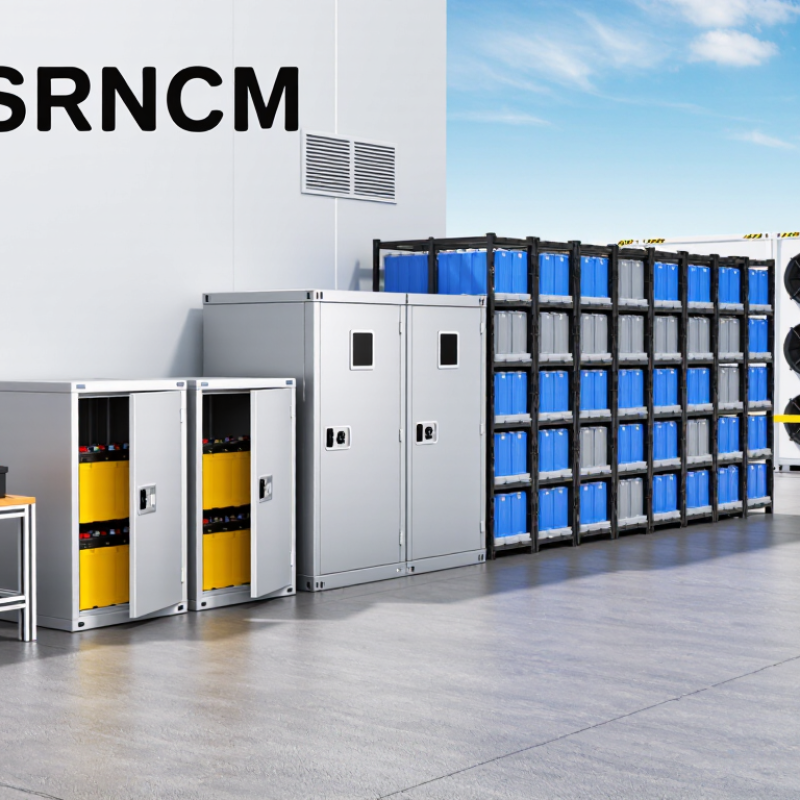
Lithium battery storage solutions store electricity in rechargeable cells and release it when demand rises or generation falls. A battery pack combines cells with a battery management system (BMS), which monitors voltage, temperature, and current. It helps balance cells and may limit charging or output when readings exceed operating ranges. In many systems, an inverter converts the battery’s direct current into alternating current for household or facility equipment. Small details matter.
Tips: Match usable capacity and power rating to actual loads, not just daily energy use. Check installation conditions and the system’s stated temperature range. Keep maintenance and fault records; recurring alerts deserve attention.
During charging, control equipment manages the flow of electricity into the cells. During discharge, the inverter supplies power to connected loads, while the BMS continues monitoring the pack. Some systems can also coordinate with solar generation or the electrical grid, depending on their design. Performance varies with temperature, charge habits, system settings, and battery age. Sizing is not always neat: backup needs can change, and a calculated estimate may miss short power peaks. Review real usage over time, and have qualified personnel assess installation and operating requirements.
China’s Top 10 Lithium Battery Storage Solutions at a Glance
China’s lithium storage market covers ten practical formats: wall-mounted home batteries, floor-standing modular units, all-in-one systems, hybrid-inverter packages, AC-coupled retrofits, off-grid setups, rack-mounted backup batteries, commercial cabinets, containerized grid storage, and solar-powered microgrids. They serve different needs, not a single ranking. A compact home unit may fit beside a utility room wall, while a container system needs a prepared outdoor site and careful installation planning.
Look beyond capacity. Check usable energy, continuous output, inverter compatibility, operating temperature, warranty terms, and battery-management features. A 10-kWh label does not tell you how much energy is available during a cloudy evening. Ask how the system handles heat, ventilation, and maintenance. Small details matter. Installation quality matters too.
For homes, modular or hybrid systems can pair well with rooftop solar, but existing wiring may limit options. Businesses often consider cabinets for peak-load support, while remote sites may need off-grid designs with backup generation. Lithium iron phosphate is common in stationary storage, yet chemistry alone cannot establish safety or lifespan. Request independently verifiable test documents and a clear service plan. One imperfect point: published performance figures rarely reflect every site’s real weather and usage. A qualified installer should assess the actual load profile before sizing equipment.
A comparison of 10 lithium-ion cell chemistries by typical gravimetric energy density. These are chemistry options, not a company ranking.
Bars show the midpoint of each indicative cell-level range in Wh/kg. Actual values vary by cell design and manufacturer; system-level energy density is lower because packs include enclosures, cooling, and control equipment. Energy density is only one factor in choosing a storage solution.
Lithium battery storage solutions differ in chemistry, power electronics, controls, and operating temperature. Lithium iron phosphate systems generally prioritize thermal stability and cycle life, while nickel-rich chemistries often offer higher energy density. Those trade-offs affect footprint, usable capacity, and maintenance planning. Sodium-ion and flow batteries may suit different applications, but availability and system design vary. A chemistry label alone cannot predict performance.
Tips: Compare usable kilowatt-hours, continuous power, round-trip efficiency, warranty conditions, and expected cycle life. Check whether figures describe cells or the complete system. Ask how performance changes in cold weather and at partial charge. Small details matter.
For homes, peak-shaving systems need reliable inverters and clear backup limits. Commercial sites may value modular racks, monitoring, and service access more than maximum energy density. A battery management system tracks cell voltage and temperature; thermal controls help manage heat during charging and discharge. Compare results under the same test conditions, since efficiency and capacity depend on load, temperature, and age. Rankings can mislead. I would treat any “top ten” list as a starting point, not a purchase decision. Some specifications still leave room for interpretation.
Comparing China’s top ten lithium battery storage solutions requires more than checking quoted prices. Safety should be examined at cell, module, and system levels. Ask about battery chemistry, temperature monitoring, fire detection, and how the battery management system responds to abnormal conditions. Review test reports and installation requirements, not just a list of claimed protections. Small details matter.
For cost, compare the installed price with expected operating costs, warranty terms, and replacement assumptions. A lower quote may exclude cabling, controls, or commissioning. Capacity also needs careful reading: nominal kilowatt-hours are not always fully usable. Check the stated depth of discharge, continuous power, and whether capacity changes with temperature or operating conditions. A unit rated for a large home may still feel undersized during several cloudy days.
Service can separate similar-looking proposals. Confirm response times, local technician availability, spare-part arrangements, and what the warranty actually covers. Ask who handles software updates and remote monitoring. These points are easy to overlook when comparing spreadsheets. Yet service promises can be vague, and even a thorough review cannot predict every site-specific issue. Request clear answers in writing, then compare systems against the same load profile and installation assumptions.
Choosing among China’s lithium battery storage solutions starts with the job, not the advertised capacity. For a home, list evening loads such as lights, refrigeration, and heating, then estimate how many hours backup must last. A 10 kWh battery may suit modest needs, but high-power appliances can drain it quickly. Check usable capacity, inverter output, and whether the system can expand later. Quiet operation matters.
Commercial sites need a different calculation. A workshop may value short bursts of high power, while a refrigerated warehouse may need longer backup. Review the load profile, peak demand, ventilation, fire protection, and monitoring options before comparing quotes. Ask how performance changes with temperature and repeated cycling. A tidy spreadsheet can still miss an awkward installation constraint.
Utility-scale projects depend on grid connection, dispatch requirements, and service access. Modular racks can simplify maintenance, but they also require careful thermal management and fault isolation. Request test reports, warranty terms, and clear capacity-retention assumptions; compare them against the project’s operating conditions. For Chinese suppliers, verify manufacturing capability and after-sales support directly, and confirm that equipment meets applicable standards in its destination market. The lowest price is not always the lowest lifetime cost.
Rechargeable cells store electricity and release it when demand rises. An inverter can convert battery power for household or facility equipment.
It monitors voltage, temperature, and current. It can balance cells and limit charging or output when readings exceed operating ranges. Small details matter.
List evening loads such as lights, refrigeration, and heating. Estimate backup hours, then check usable capacity and inverter output. A 10 kWh battery may not cover high-power appliances for long.
Match the system to the site’s load profile. A workshop may need brief power bursts; a refrigerated warehouse may need longer backup. Check ventilation, fire protection, and monitoring.
Review grid connection, dispatch requirements, and service access. Modular racks may ease maintenance, but thermal management and fault isolation still need careful planning.
Performance varies with temperature, charging habits, settings, and age. Check the stated temperature range and ask how repeated cycling affects output.
Request test reports, warranty terms, and capacity-retention assumptions. Compare those details with actual operating conditions, not just a neat spreadsheet.
Not always. Short power peaks can be missed, and needs may change. Review real usage over time; the estimate may need another look.
Check installation conditions, service access, and after-sales support. Have qualified personnel assess operating requirements, and keep records of recurring fault alerts.
This article introduces ten leading lithium battery storage solution types available in China, explaining how they store and deliver energy for different needs. It outlines key technologies and system designs, including differences in capacity, efficiency, durability, and operating characteristics. Rather than treating one option as best for everyone, it shows how residential, commercial, and utility-scale projects require different balances of performance, space, and budget.
Readers will learn how to compare solutions by safety features, total cost, usable capacity, and after-sales service. The article also considers installation conditions and energy-use patterns when matching a system to a home, business, or grid-support project. By understanding these factors, buyers can ask more useful questions, assess trade-offs, and decide what is the best way to store lithium batteries for their specific application.

Autrionyx Power