As lithium batteries become integral to modern technology, understanding what affects lithium battery lifespan is crucial. According to a market report by BloombergNEF, the global lithium-ion battery market is expected to reach over $400 billion by 2026. This growth underscores the demand for longer-lasting battery solutions.
Factors including temperature, charging practices, and battery cycles significantly influence battery longevity. Studies show that extreme temperatures can degrade battery performance. For instance, a rise in temperature by just 10 degrees Celsius can reduce battery lifespan by 20%. Moreover, improper charging habits, such as constant deep discharges, exacerbate the issue.
Despite advancements, there are still challenges. Many users remain unaware of how their usage affects battery life. Educational initiatives are needed to address this gap. By understanding these dynamics, consumers can extend the lifespan of their batteries and contribute to a more sustainable future.
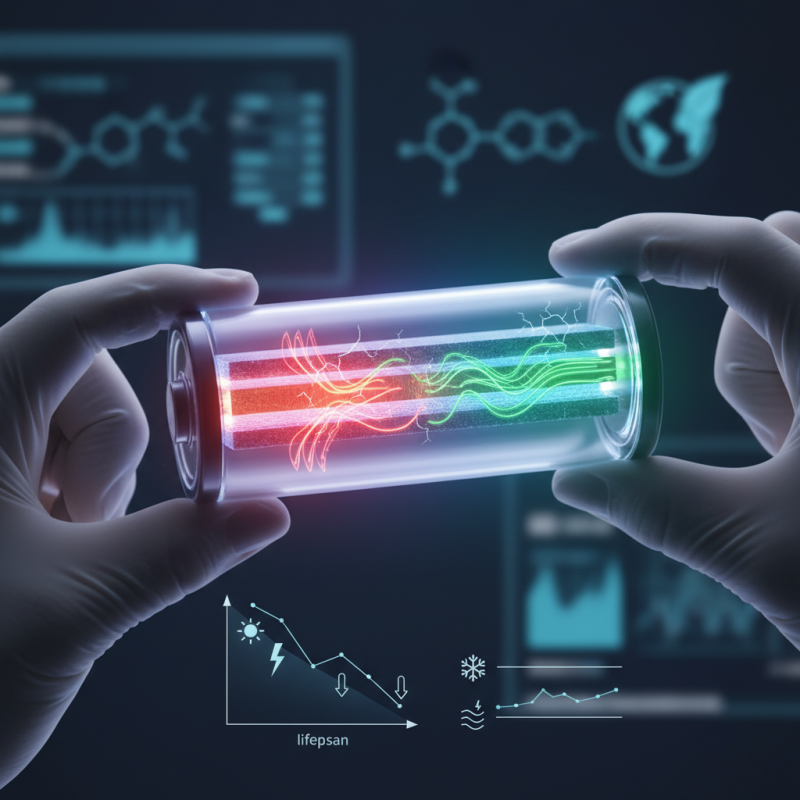
Lithium battery chemistry is critical for longevity. In 2026, advancements in materials and formulations will enhance battery lifespan. Research shows that increasing the nickel content in cathodes can improve energy density. However, higher nickel also leads to thermal instability. This trade-off must be managed carefully to maintain safety.
Battery composition also includes electrolyte formulations. Solid-state electrolytes are promising. They can potentially reduce degradation compared to liquid electrolytes. Studies indicate that replacing traditional solvents can increase cycle life by 30%. Despite these improvements, challenges remain, such as manufacturing scalability.
Temperature plays a vital role in battery performance. Higher operating temperatures accelerate degradation rates. Conversely, cold conditions can reduce capacity. This complex interplay demands careful management in real-world applications. Understanding these factors is essential for optimizing lithium battery lifespan in the coming years, yet specific solutions are still under exploration.
Temperature variations significantly impact the performance and lifespan of lithium batteries. Research indicates that elevated temperatures, often exceeding 25°C, can accelerate battery degradation. In fact, a study by the National Renewable Energy Laboratory shows that battery life can be halved for every increase of 10 degrees Celsius. This relationship highlights the critical importance of thermal management in battery usage.
When exposed to extreme temperatures, lithium-ion batteries may experience capacity loss and internal resistance increases. At high temperatures, the electrolyte can decompose, leading to gas generation and swelling. Conversely, low temperatures can hinder lithium-ion mobility, resulting in reduced efficiency and performance. A report by the International Energy Agency emphasizes that maintaining optimal operating temperatures is essential for maximizing battery efficiency and lifespan.
Despite advancements in battery technology, challenges remain. Many users underestimate temperature effects on battery health. Regular monitoring of operating conditions is often neglected. In this regard, creating awareness about temperature management can foster better battery care practices among consumers. Ultimately, temperature variation is a critical factor that must be addressed to enhance battery longevity.
The lifespan of lithium batteries is significantly influenced by charge cycles and usage patterns. Every time you charge a battery, it undergoes a cycle. A full cycle is defined as a complete discharge followed by a full charge. Repeated cycles can gradually diminish the battery's capacity. Many users tend to keep their devices plugged in longer than necessary, leading to overheating. This can accelerate degradation.
Understanding usage patterns is crucial. Heavily using devices for gaming or intensive applications leads to higher temperatures. Elevated heat not only affects immediate performance but also shortens lifespan. It's essential to monitor charging habits. Charging to 100% and letting it drop to 0% regularly can wear the battery down faster. Instead, try to keep the battery level between 20% and 80%.
Environmental factors also play a role. Exposure to high temperatures can further compromise the battery's integrity. Regular maintenance, such as avoiding extreme conditions, can mitigate some of the adverse effects. Reflecting on personal charging habits may reveal areas for improvement. Small adjustments can lead to a more sustainable battery life in 2026 and beyond.
The advancements in battery technology are crucial for enhancing lithium battery lifespan in 2026. New materials and innovative designs are being explored. Solid-state batteries, which replace liquid electrolytes with solid ones, show promise. They can potentially reduce risks of leakage and fire. This shift could lead to longer lifespans compared to traditional lithium-ion batteries.
Recycling processes are also improving. Enhanced recycling methods can reclaim more valuable materials. This approach decreases the need for new resources and encourages sustainability. However, the execution of these methods often remains inefficient. There is a significant gap in technology adoption within the industry. Many manufacturers still rely on older processes that hinder overall progress.
Market demand continues to evolve, driving the need for better performance. Consumers are increasingly seeking longer-lasting batteries. But research is often slow to catch up. There seems to be a disconnect between consumer expectations and industry capabilities. Balancing innovation with scalability remains a challenge, leaving room for improvement in future designs.
Environmental conditions significantly affect the lifespan of lithium batteries. Temperature extremes can accelerate chemical reactions within the battery. According to a 2022 study published in the Journal of Power Sources, lithium batteries can lose up to 20% capacity when exposed to temperatures above 40°C (104°F) for extended periods. Conversely, cold temperatures can slow down these reactions, causing reduced efficiency and performance.
Humidity also plays a crucial role. High humidity can cause corrosion and short-circuiting. A report from the International Energy Agency states that optimal humidity levels for lithium battery storage are between 30% and 70%. Outside this range, the risk of deterioration increases. Variability in climate can create unpredictable outcomes in battery durability.
The cycle of charging and discharging is another factor influenced by environmental conditions. Frequent deep discharges under high temperatures can lead to accelerated degradation. Batteries operate best within controlled conditions. Striving for the ideal environment can extend battery life. However, this is often impractical in real-world applications, leading to inconsistencies in performance. Understanding these variables can provide insights into improving battery technology.
| Factor | Impact on Lifespan (%) | Optimal Condition | Notes |
|---|---|---|---|
| Temperature | 30% | 20-25 °C | High temperatures can enhance degradation. |
| Humidity | 20% | 30-50% RH | High humidity can cause corrosion. |
| Charge Cycles | 25% | < 1000 cycles | Frequent deep discharges can shorten lifespan. |
| Depth of Discharge | 15% | < 50% | Shallow discharges are healthier for battery cells. |
| Storage Conditions | 10% | Cool, dry, and moderate charge state | Optimal storage extends inactive lifespan. |
: Higher temperatures can degrade batteries faster. Battery life can halve with every 10°C increase in temperature.
In extreme heat, batteries may swell and lose capacity. Cold temperatures can hinder lithium movement, reducing efficiency.
Proper temperature management maximizes battery efficiency and lifespan. Many users overlook the importance of this aspect.
Innovations like solid-state batteries use solid electrolytes. They may provide longer lifespans and reduced risks of fire.
Improved recycling methods reclaim more materials and promote sustainability. However, execution of these methods is sometimes inefficient.
There is often a disconnect between what consumers want and what technology delivers. Balancing innovation with scalability remains a challenge.
Regular monitoring of operating conditions is crucial. Awareness of temperature effects can improve battery care practices.
Many still rely on outdated processes. This reliance hinders overall progress and innovation in battery technology.
In exploring what affects lithium battery lifespan in 2026, several critical factors emerge. The chemistry and composition of the batteries play a significant role in determining their longevity, as advancements in materials can enhance performance. Furthermore, temperature variations are crucial; extreme heat or cold can adversely affect battery efficiency and lifespan.
Additionally, the number of charge cycles and usage patterns greatly influence battery degradation, with frequent deep discharges leading to quicker wear. Finally, environmental conditions, such as humidity and exposure to elements, can impact lithium battery durability. Understanding these factors is essential for maximizing battery life and ensuring optimal performance in future applications.
Autrionyx Power