How long does it take to charge a lithium battery? The honest answer depends on more than the charger’s label. Battery capacity, charging current, battery age, temperature, and the battery management system all affect the clock.
A small 12-volt lithium battery may reach a full charge in three to five hours with a suitable charger. A larger 100Ah battery can require eight hours or longer. Fast chargers reduce waiting time, but they may create more heat. Heat matters.
Isidor Buchmann, founder of Cadex Electronics and a respected battery specialist, explains, “Charging a battery is not like filling a tank; it is a chemical process.” That idea guides this article. Charging usually moves quickly at the beginning. The final stage slows down as the battery approaches its voltage limit. A charger rated at 20 amps may not deliver 20 amps continuously.
Real conditions can be messier. A cold battery may charge slowly, while an older battery may lose capacity and need less time than expected. That does not mean it performs well. It may simply hold less energy.
This guide examines charging times for common lithium battery sizes, charger ratings, and everyday applications. It also considers partial charging, battery temperature, and manufacturer recommendations. These details are easy to overlook.
There is no universal answer. A rough estimate uses battery capacity divided by charging current, then adds extra time for charging losses and the final charging stage. Actual results can differ. Sometimes, noticeably.
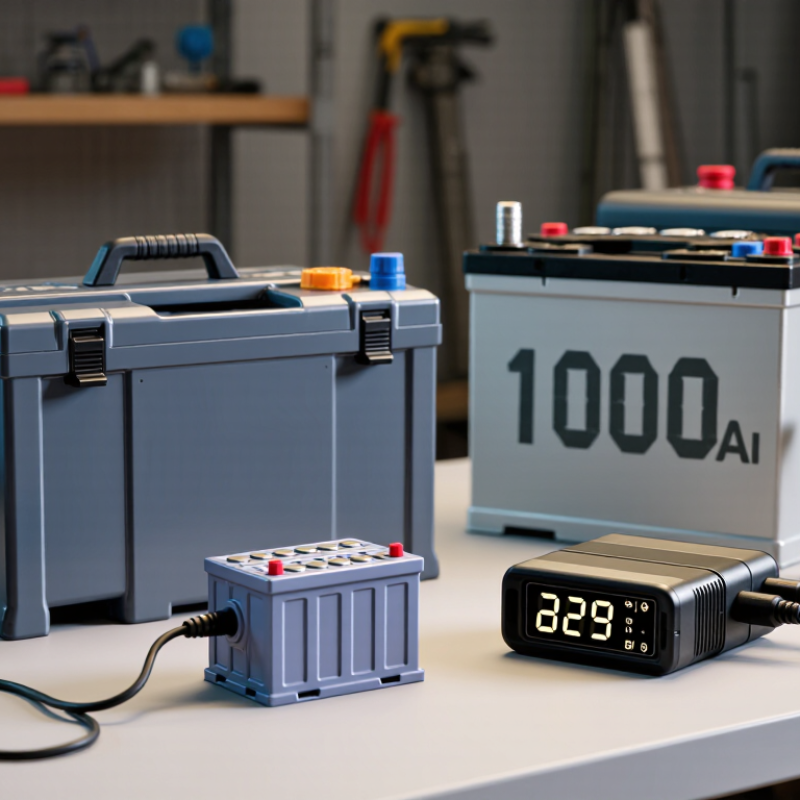
Lithium Battery Charging Time: The Main Factors That Affect It
Lithium battery charging time is rarely a fixed number. A 100 Ah battery receiving 20 A needs about five hours under ideal conditions. Real charging usually takes longer. Charging slows near full capacity to protect the cells. Battery University reports that many lithium-ion batteries need roughly two to three hours at moderate charging rates. However, chemistry, cell design, and safety limits can change that estimate.
Battery capacity is only one factor. Charger output, battery age, temperature, and the battery management system also matter. A cold battery may accept less current, while a hot battery can trigger automatic power reduction. The U.S. Department of Energy’s Alternative Fuels Data Center reports that Level 2 electric vehicle charging commonly takes four to ten hours. Direct-current fast charging can take about 20 to 60 minutes to reach 80 percent. These figures show why “full charge time” needs a clear starting point.
The final 20 percent is often the slowest. A 7 kW charger cannot deliver its rated power continuously if the battery limits current. Larger packs may charge quickly when paired with stronger equipment, but household circuits usually remain the bottleneck. The International Energy Agency’s Global EV Outlook 2024 records more than four million public charging points worldwide in 2023, showing how charging access is expanding. Still, charger availability does not guarantee charging speed. I have found simple time calculators useful, but they can create false confidence. Temperature and battery condition deserve more attention.
Top Lithium Battery Charging Times: How Long Does It Take?
Charging time depends mainly on battery capacity, charger output, starting charge level, battery chemistry, temperature, and the battery management system. The estimates below assume a healthy lithium-ion battery, a compatible charger, and normal charging conditions of approximately 20–25°C (68–77°F).
| Battery Capacity |
Charger Output |
Approx. Charging Power |
Charging Range |
Estimated Time |
Main Reason for the Estimate |
10 Ah at 12 V
≈120 Wh |
2 A |
≈24 W |
0–100% |
5.5–6.5 hours |
Moderate current with additional time required during the final constant-voltage phase. |
10 Ah at 12 V
≈120 Wh |
5 A |
≈60 W |
0–100% |
2.2–2.8 hours |
Higher current shortens the constant-current phase, but charging still slows near full capacity. |
50 Ah at 12 V
≈600 Wh |
10 A |
≈120 W |
0–100% |
5.5–6.5 hours |
The charger supplies approximately 0.2C, a commonly used moderate charging rate. |
100 Ah at 12 V
≈1,200 Wh |
20 A |
≈240 W |
0–100% |
5.5–6.5 hours |
A similar current-to-capacity ratio produces a similar overall time, assuming the battery permits this rate. |
| 500 Wh battery pack |
100 W charger |
100 W maximum |
0–100% |
5.5–6.5 hours |
Energy losses and reduced charging power near full capacity increase the theoretical five-hour result. |
| 1,000 Wh battery pack |
500 W charger |
500 W maximum |
0–100% |
2.2–2.8 hours |
High charging power reduces the bulk-charge period, while thermal and safety limits may reduce the final rate. |
| Any compatible capacity |
Same charger and battery |
Same charging system |
20–80% |
Usually about 45–60% of the 0–100% time |
The battery spends less time in the slower top-of-charge phase. |
Basic estimation:
Charging time is approximately calculated as
Battery capacity ÷ Charging current × 1.1–1.3.
For energy-based systems, use
Battery energy ÷ Charger power × 1.1–1.3.
The actual time can be longer when the battery is cold or hot, the charger is undersized, the battery is deeply discharged, or the battery management system limits current.
Important factors affecting lithium battery charging time:
battery capacity, charger current or power, state of charge, lithium-ion chemistry, cell temperature, battery age, internal resistance, cable losses, charger efficiency, and the battery management system's safety limits.
How to Calculate the Charging Time for a Lithium Battery
Top Lithium Battery Charging Times: How Long Does It Take?
To calculate charging time, divide the battery’s capacity by the charger’s current. The basic formula is charging time = amp-hours ÷ amps. For example, a 100 Ah lithium battery connected to a 20 A charger needs five hours ideally. Real charging usually takes longer. Add about 10% to 30% for charging losses and the final voltage stage. The same example may take 5.5 to 6.5 hours. If the battery starts at 20% charge, calculate only 80 Ah: 80 ÷ 20 equals four ideal hours. Check the battery’s permitted charging current before using this method.
Tips: Record the starting charge level, charger output, and room temperature. Cold conditions can slow charging or prevent it. Keep the battery within its specified temperature range. The battery management system may also reduce current near full charge. That tapering stage is easy to overlook.
You can also estimate time with watt-hours: battery energy ÷ charger power. A 1,200 Wh battery using a 240 W charger needs five ideal hours. This method works best when voltage losses are included. Charger ratings can be optimistic, and batteries age. The estimate is useful, but it is not exact. Measure real charging sessions and adjust your planning. A small error may become significant during overnight charging.
Typical Charging Times for Common Lithium Battery Types
Top Lithium Battery Charging Times: How Long Does It Take?
Typical charging times depend on battery chemistry, capacity, charger output, and battery condition. A small lithium-ion battery, such as a 2,000 mAh unit, usually needs two to four hours. Larger 10 Ah lithium-ion packs may require four to eight hours with a standard charger. Fast chargers reduce the waiting time, but they also increase heat and may shorten battery life if used constantly.
Lithium iron phosphate batteries often take three to six hours for a household-sized pack. Their charging curve is steady, but the final few percent can move slowly.
Lithium-polymer batteries commonly charge within one to two hours, especially in compact devices. Larger packs can take much longer.
Lithium-titanate batteries may charge in one to two hours because they tolerate higher charging rates, though charger compatibility remains essential.
A practical estimate uses this formula: charging time equals capacity divided by charger current, then add 10 to 30 percent. A 10 Ah battery with a 2-amp charger may need about five to six hours.
This is only an estimate. Temperature, cable resistance, and battery age change the result. In real use, charging sometimes takes longer than the label suggests. That difference deserves attention. Keep the battery at room temperature, use the specified charger, and stop charging when unusual heat, swelling, or odor appears. Never judge charge time by capacity alone.
The Stages of a Lithium Battery Charging Cycle
A lithium battery does not charge at one constant speed. Its cycle usually moves through several controlled stages. When voltage is very low, the charger may apply a gentle precharge current. This protects cells that have fallen deeply below their normal range. The main bulk stage follows. Here, constant current pushes energy into the battery, and voltage rises steadily. Charging feels fastest during this part. A battery at 20% may gain capacity quickly, but its temperature still needs monitoring.
Near the upper voltage limit, the charger changes to constant voltage. Current gradually decreases while the cells approach full charge. This saturation stage can take longer than expected. The final few percentage points are deliberately slow. A battery management system may reduce current or stop charging when limits are reached. In a multi-cell pack, balancing can add time. It helps reduce differences between individual cell voltages, although balancing is not identical in every design.
Actual charging time depends on capacity, charger output, starting state, temperature, and battery age. A cool pack may charge slowly, while excessive heat can trigger a pause. The charger may pause. A larger charger does not always mean a shorter safe cycle. The battery may limit incoming current. Real charging logs often look uneven, not like a clean countdown. That matters for tools, vehicles, and backup systems. Check the specified charging limits and allow airflow. One session can mislead. Repeated slow sessions deserve investigation.
Top Lithium Battery Charging Times: How Long Does It Take?
The Stages of a Lithium Battery Charging Cycle
This representative profile shows a lithium-ion battery charged with a compatible high-power charger.
During the constant-current stage, charging is fastest and the battery reaches approximately 80% state of charge.
The constant-voltage stage slows the current to protect the cells, while the final taper stage takes more time to reach 100%.
Actual charging times vary with battery capacity, charger power, temperature, battery age, and the battery management system.
Safe Practices for Faster and More Efficient Charging
Top Lithium Battery Charging Times: How Long Does It Take?
Safe Practices for Faster and More Efficient Charging
Charging time depends on battery capacity, temperature, charger output, and battery condition. These variables can change the answer by hours. The U.S. Department of Energy’s Alternative Fuels Data Center reports that Level 2 electric-vehicle charging commonly takes four to ten hours. DC fast charging may reach 80% in about 20 minutes to one hour. These are ranges, not promises. Charging usually slows after 80%, protecting the cells from excessive heat and stress.
Use the charger recommended for the battery system, and inspect its cable before connecting. Keep charging equipment dry, ventilated, and away from soft surfaces that trap heat. A cool battery may charge slowly, while a very hot battery may also limit power. Preconditioning can help when supported. The International Energy Agency’s Global EV Outlook 2024 recorded more than four million public charging points worldwide by the end of 2023. More access helps, but more chargers do not guarantee better charging.
A practical target is charging to 80% for daily use, unless the manufacturer specifies otherwise. This is useful, but not universal. Some devices need a full charge, and some battery systems manage this automatically. I would not chase the fastest charging speed every day. Faster is not always healthier. Battery aging, weather, and charger quality deserve equal attention. Maybe the simplest habit works best: check the temperature, use the correct equipment, and stop when the battery is full.
Conclusion
Charging a lithium battery can vary significantly depending on its capacity, charger output, battery condition, temperature, and charging method. If you are asking, “how long does it take to charge a lithium battery,” a simple estimate is to divide the battery’s capacity by the charger’s rated current, then add extra time for charging losses and the final charging stage. Smaller batteries may charge within a few hours, while larger batteries can require much longer. Different battery types and applications also have different typical charging times.
A lithium battery usually charges in stages: a constant-current phase quickly restores most of its energy, followed by a constant-voltage phase that gradually completes the charge. For faster and more efficient charging, use a compatible charger, keep the battery within its recommended temperature range, avoid damaged equipment, and allow proper ventilation. Following the manufacturer’s charging limits and monitoring the process can help improve safety, battery performance, and service life.

 Autrionyx Power