In today's rapidly evolving energy landscape, understanding what is the difference between lithium and lead acid batteries is crucial. According to a report by the International Energy Agency, the demand for advanced battery technologies is projected to increase by over 20% annually through 2030. Both battery types play vital roles in various applications, but their characteristics differ significantly.
Lithium batteries, known for their high energy density and longer lifespan, can last up to 10 years with consistent performance. In contrast, lead acid batteries typically have a shorter cycle life of around 3 to 5 years. A study from BloombergNEF highlights that lithium-ion batteries are expected to reduce overall costs by 30% in the next few years, making them more appealing for sustainable energy solutions.
However, lead acid batteries are still widely used due to their lower upfront costs and established recycling systems. There's ongoing debate about their environmental impact compared to lithium alternatives. Understanding these nuances will help consumers and businesses make informed choices about their energy storage solutions.
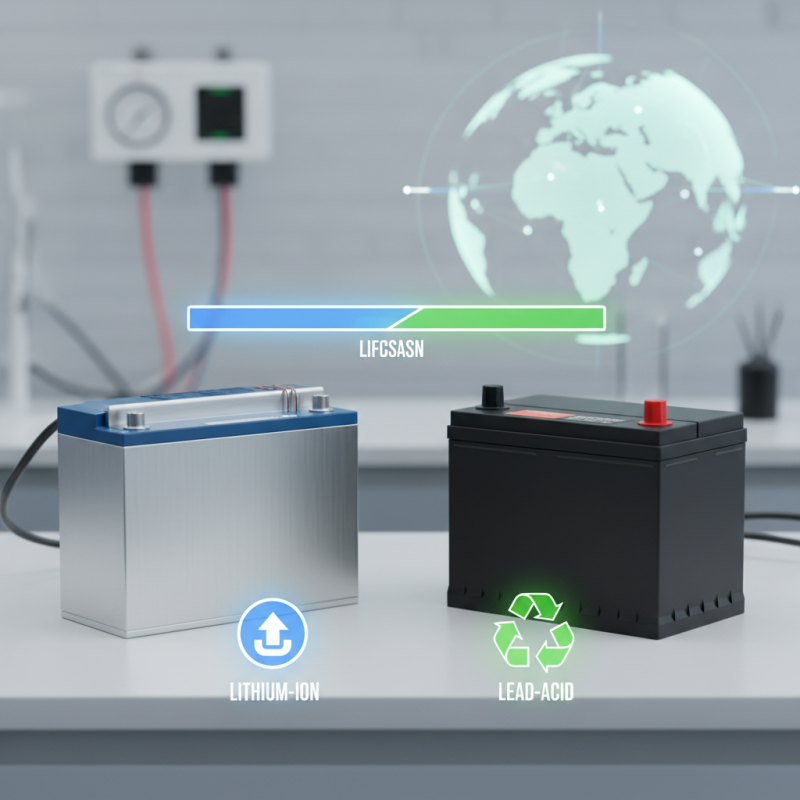
Differences in Energy Density: Lithium vs Lead Acid Batteries
Energy density is a critical factor when comparing lithium and lead-acid batteries. Lithium batteries generally offer a higher energy density, often reaching around 150-250 Wh/kg. In contrast, lead-acid batteries provide only 30-50 Wh/kg. This difference means that lithium batteries can store more energy in a smaller, lighter package. For applications where space and weight matter, lithium is often the better choice.
However, lead-acid batteries have their advantages. They are more cost-effective upfront and generally safer in terms of thermal runaway risk. Their proven reliability makes them a common choice for many industries. One drawback of lead-acid batteries is their shorter cycle life. Frequent cycling can lead to quicker degradation. In contrast, lithium has a much longer lifespan, which can offset its higher initial cost.
Tips: When choosing a battery type, consider your needs. If weight and space are critical, go with lithium. For larger stationary applications, lead-acid might suffice. Always evaluate the trade-offs between cost and functionality. Remember, understanding your specific requirements is key to making an informed decision.
Cycle Life Comparison: Longevity of Lithium versus Lead Acid Batteries
Cycle life is a significant factor when comparing lithium and lead-acid batteries.
Lithium batteries typically last longer, making them a popular choice in various applications.
According to industry data, lithium batteries can achieve cycle lives of 2,000 to 7,000 cycles, depending on usage and charging practices.
In contrast, lead-acid batteries usually offer around 500 to 1,200 cycles.
This stark difference highlights lithium's advantage in longevity.
Moreover, lithium batteries maintain performance over various cycles.
They experience less capacity fade, especially in deep discharge scenarios.
Industry reports reveal that lithium batteries retain about 80% of their capacity after 2,000 cycles.
Lead-acid batteries, however, may struggle to retain even 50% of their capacity under similar conditions.
This decline impacts reliability and overall efficiency.
It's crucial to acknowledge factors influencing cycle life.
Environmental conditions, charging methods, and maintenance all play roles.
Some may argue that lead-acid batteries are more forgiving regarding misuse.
While this is true, the long-term cost benefits of lithium cannot be easily ignored.
Failure to recognize these aspects can lead to higher operational costs over time.
Charging Efficiency: Analyzing Charge Times for Both Battery Types
Charging efficiency plays a critical role when comparing lithium and lead-acid batteries. Research indicates that lithium batteries can charge up to 90% faster than lead-acid ones. According to industry studies, a lithium battery can reach full charge in approximately 1-3 hours. In contrast, lead-acid batteries typically require 8-12 hours to charge fully. This time discrepancy significantly affects performance in applications needing quick turnaround.
Moreover, lithium batteries may sustain their efficiency over a broader range of cycles. They often provide around 2,000-5,000 charge cycles, while lead-acid batteries average only 200-300 cycles. Each cycle influences the total available energy and the frequency of replacement. The faster charge times of lithium batteries contribute to higher operational efficiency. However, despite their advantages, issues such as initial cost and management systems remain areas for consideration.
While the quick charge capability of lithium batteries is appealing, factors like temperature sensitivity come into play. High temperatures can affect longevity and performance. In contrast, lead-acid batteries offer more robustness in extreme conditions. Industry data reveals that maintaining an optimal charging environment remains crucial for both types. Each battery type has its pros and cons, warranting a deeper exploration of specific use cases and environmental factors.
Charging Efficiency: Comparing Charge Times of Lithium and Lead Acid Batteries
Weight and Size: Impact of Battery Technology on Portability
When considering battery technology, weight and size significantly impact portability. Lithium batteries are lighter and smaller than lead-acid batteries. This compact design makes them ideal for portable applications, such as power tools and personal electronics. In contrast, lead-acid batteries are bulkier, which can hinder functionality where space is limited.
Tips: When choosing a battery, think about where you'll use it. If you're in a tight space or need to carry it often, lithium may be the better choice. Always check the weight specifications before purchase. Sometimes, the larger lead-acid batteries might seem more robust but can be cumbersome.
Moreover, lithium batteries offer higher energy density. They discharge energy much more efficiently, providing longer run times for the same weight. Lead-acid batteries lose charge quickly and add unnecessary weight. However, they can be more affordable upfront. Reflect on how often you’ll need to use the battery and how critical weight is for your needs.
Tips: Consider long-term costs versus initial price. A lightweight battery may cost more but save you hassle in the long run. Evaluate your specific use case to ensure you make the best decision.
Cost Analysis: Initial Investment and Lifecycle Expenses of Each Battery
When comparing lithium and lead-acid batteries, cost is a critical factor. Initially, lithium batteries typically have a higher upfront cost. The price difference can be significant, with lithium batteries costing around 30% to 40% more than lead-acid models. However, this is just the starting point.
Over their lifecycle, lithium batteries often prove more economical. They can last two to three times longer than lead-acid batteries. A recent industry report from the Battery Council International found that, while lead-acid batteries last about 3 to 5 years, lithium batteries can last 8 to 15 years or more. This longevity translates to lower replacement costs in the long run.
Maintenance costs should also be factored in. Lead-acid batteries require regular maintenance, including checking water levels. Lithium batteries, on the other hand, are generally maintenance-free. This saves time and reduces operational expenses. Yet, some users report challenges in understanding lithium battery management systems, which can lead to inefficiencies if not properly handled. Each technology has its unique considerations that should be weighed carefully.
China Top 10 Differences Between Lithium and Lead Acid Batteries
| Characteristic |
Lithium Battery |
Lead Acid Battery |
| Energy Density (Wh/kg) |
150-250 |
30-50 |
| Cycle Life (number of cycles) |
2000-5000 |
300-600 |
| Weight (kg for 100Ah) |
12-15 |
25-30 |
| Charge Time (hours) |
1-3 |
6-12 |
| Cost per kWh ($) |
300-700 |
150-250 |
| Self-discharge Rate (%) |
2-5 |
10-15 |
| Environmental Impact |
Low (recyclable) |
Moderate (toxic materials) |
| Operating Temperature (°C) |
-20 to 60 |
-20 to 40 |
| Applications |
Electric vehicles, portable electronics |
Starting, lighting, ignition (SLI) and backup power |
| Maintenance |
Minimal |
Regular checks required |
FAQS
: Lithium batteries have an energy density of 150-250 Wh/kg, while lead-acid batteries range from 30-50 Wh/kg.
Lithium batteries are lighter and more compact, making them suitable for applications where weight and space are important.
Lead-acid batteries are generally more cost-effective upfront compared to lithium batteries.
Lithium batteries typically have a longer lifespan, which can offset their initial higher cost over time.
Yes, lead-acid batteries present a lower risk of thermal runaway, making them a safer choice in some situations.
Lighter lithium batteries are preferable for portable applications, while bulkier lead-acid batteries can be cumbersome.
Think about the space available and the frequency of use when choosing between lithium and lead-acid batteries.
Lithium batteries discharge energy efficiently for longer run times, whereas lead-acid batteries can lose charge quickly.
Consider the balance between initial cost and long-term usage efficiency when deciding on a battery type.
Yes, always evaluate how much you value weight, safety, and long-term cost against upfront expenses when making your decision.
Conclusion
This article explores what is the difference between lithium and lead acid batteries across several key dimensions. First, it addresses energy density, highlighting how lithium batteries offer higher energy storage capabilities compared to their lead acid counterparts. The discussion then shifts to cycle life, showcasing the superior longevity of lithium batteries, which can significantly outlast lead acid batteries.
Additionally, charging efficiency is examined, revealing that lithium batteries typically charge faster, impacting their usability in various applications. The weight and size differences are also significant, as lithium batteries are generally lighter and more compact, enhancing portability. Finally, the article analyzes the cost implications of both battery types, considering initial investment and long-term lifecycle expenses, offering insights into their overall economic viability.

 Autrionyx Power