Discover our primary catalog of high-efficiency lithium battery systems, smart BMS modules, and integrated solar backup packages for commercial and industrial use.
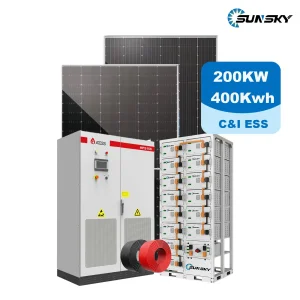
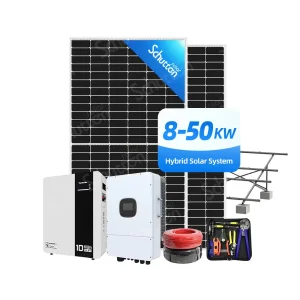
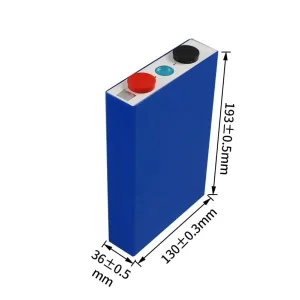
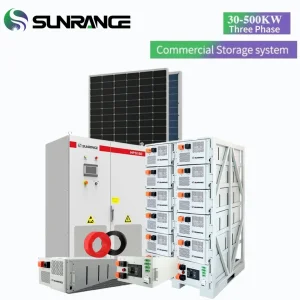
Modern data centers, manufacturing corridors, and telecommunication networks cannot afford utility interruptions. Even momentary voltage sags can disrupt complex machinery, corrupt server data, and result in millions of dollars in lost productivity. This critical dependence has driven the global transition from traditional Lead-Acid Uninterruptible Power Supply (UPS) configurations to high-density, smart Lithium Iron Phosphate (LiFePO4) and advanced Lithium-Ion power backup battery units.
LiFePO4 chemistry has emerged as the premier choice for stationary and motive backup power. Its physical layout offers superior thermal runaway thresholds (up to 600°C compared to 220°C for standard NMC batteries), preventing hazardous events even in high-temperature industrial environments. Furthermore, LiFePO4 cells yield exceptional cycle life, delivering 4,000 to over 6,000 cycles at an 80% Depth of Discharge (DoD). This translates directly to a total cost of ownership (TCO) that is up to 50% lower than traditional valve-regulated lead-acid (VRLA) batteries over a ten-year operational window.
"Selecting the right backup battery system is no longer simply about amp-hour sizing; it requires an engineering-level evaluation of continuous discharge capabilities, cell matching parameters, and smart communication compatibility."

Corporate Capabilities, Technical Innovation, & Industrial Leadership
Nanjing Autrionyx Power Co., Ltd. is a professional lithium battery manufacturer dedicated to delivering high-performance energy solutions for material handling, energy storage, and electric mobility applications. Based in Nanjing, China, the company specializes in the development and production of lithium battery systems for forklifts, energy storage systems, and golf carts, serving global industrial and commercial markets.
Autrionyx Power offers a comprehensive product portfolio including advanced lithium forklift batteries designed for high efficiency and fast charging, scalable energy storage battery systems for residential and industrial use, and lightweight, long-lasting battery solutions for electric golf carts. All products are engineered with intelligent battery management systems (BMS) to ensure safety, stability, and extended service life.
With a strong focus on innovation and quality, the company integrates cutting-edge technology with strict manufacturing standards to meet diverse customer requirements. Autrionyx also provides customized battery system solutions tailored to specific voltage, capacity, and application needs. Committed to sustainability and energy efficiency, Nanjing Autrionyx Power Co., Ltd. continues to support the global transition toward cleaner energy by delivering reliable, cost-effective, and environmentally friendly lithium battery solutions.
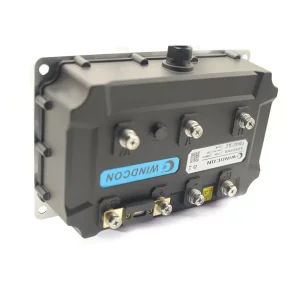
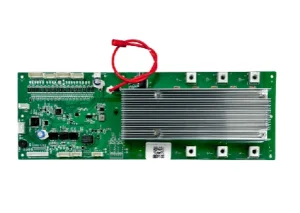
Autrionyx integrates custom dual-core BMS architectures in all products. Featuring real-time active balancing, thermal management, and comprehensive fault diagnostics with CANbus/RS485 communication protocols.
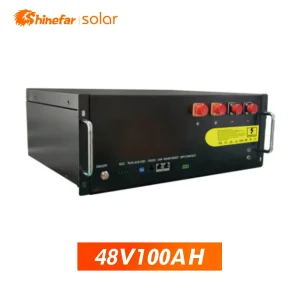
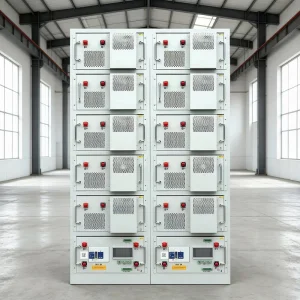
Designed for flexibility. Autrionyx systems can scale from simple 48V 100Ah rack modules up to high-voltage multi-megawatt containerized Energy Storage Systems (BESS) for grid-scale stabilization.
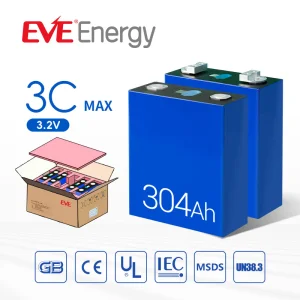
Utilizing high-grade prismatic LiFePO4 cells, our backup units maintain over 80% capacity retention after 4,000+ full charging/discharging cycles, outperforming standard market solutions.
Deciphering China's dominate battery supply chain and manufacturing excellence.
China is the global leader in the lithium battery supply chain, accounting for over 70% of global lithium-ion cell production capacity. Sourcing backup power battery units directly from advanced Chinese factories like Autrionyx Power provides B2B procurers with critical competitive leverage:
Tailoring modular battery systems to meet specific localized operational requirements.
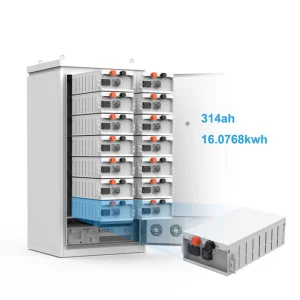
High-voltage battery racks connected in parallel (up to several MWh) integrate with solar arrays to provide peak shaving, load leveling, and immediate zero-second transition backup power during utility failure.
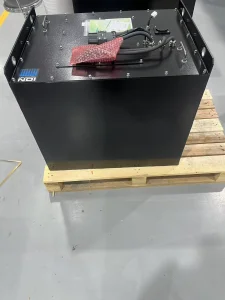
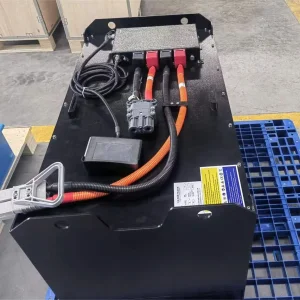
Autrionyx heavy-duty 48V and 80V lithium forklift batteries allow for opportunity charging (1 hour charge for 8 hours operation) and eliminate acid-room maintenance, dramatically lowering facility logistics OPEX.
Compact, standard 19-inch rack-mounted lithium packs (48V 100Ah/200Ah) replace bulky lead-acid batteries, providing high energy density and stable continuous power to communication towers in remote, harsh conditions.
Engineered drive kits and complete technical support packages supply the torque, high discharge C-rate, and structural battery robustness required to convert internal combustion vehicles to electric fleets.
A direct comparison illustrating why Lithium Iron Phosphate (LiFePO4) has become the gold standard.
| Performance Metric | LiFePO4 (LFP) | Lithium Nickel Cobalt Alum (NCA/NMC) | Lead-Acid (AGM/Gel) |
|---|---|---|---|
| Cycle Life (80% DoD) | 4,000 - 6,000 Cycles | 1,000 - 2,000 Cycles | 300 - 500 Cycles |
| Thermal Runaway Limit | 600°C (Extremely Safe) | 220°C (Higher Risk) | N/A (Sulfide Outgassing Risk) |
| Energy Density (Wh/kg) | 130 - 160 Wh/kg | 200 - 260 Wh/kg | 30 - 45 Wh/kg |
| BMS Integration | Mandatory (Integrated Smart BMS) | Mandatory (Highly Complex) | Not Required (Unmonitored) |
| Fast Charge Capability | Yes (Up to 1C Charge Rate) | Yes (Up to 1C Charge Rate) | No (0.1C Limit, Slow Absorption) |
| Optimal Operating Temp | -20°C to +60°C | -20°C to +45°C | +15°C to +25°C |
Ensure compliance, safety, and reliability when selecting your manufacturing partner.
When evaluating battery manufacturers, verify that the facility and products comply with key international standards. Autrionyx Power maintains a strict quality control loop aligned with these certification requirements:
A reliable manufacturer must offer comprehensive QA validation. Ask your potential partner for documentation of their cell capacity-matching procedures, welding pull-strength tests, and automated End-of-Line (EOL) testing systems. Direct factory communication ensures that BMS firmware can be customized to match your inverter or device communication protocol seamlessly.
Discover our comprehensive selection of high-voltage industrial battery systems, EV conversion kits, and heavy-duty forklift units.
Critical engineering and logistics questions answered by industry experts.
While Lithium Nickel Manganese Cobalt (NMC) cells feature higher volumetric energy density, Lithium Iron Phosphate (LiFePO4 or LFP) is preferred for stationary applications. This is due to LFP's chemical structure, which has a thermal runaway threshold of approximately 600°C. Contrast this with NMC's limit of 220°C, offering superior fire safety. In addition, LFP delivers more than double the cycle life of NMC (4,000+ cycles vs 1,500 cycles), significantly reducing the long-term cost per kilowatt-hour of energy throughput.
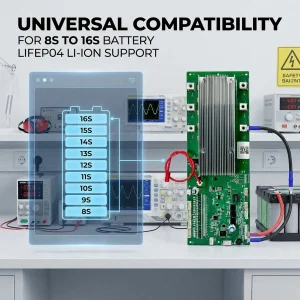
A passive BMS bleeds off excess energy from higher-voltage cells as heat through resistors during the top of the charge cycle, ensuring a balanced pack at the end of charging. An active BMS dynamically redistributes charge from higher-voltage cells to lower-voltage cells throughout both charge and discharge states. This maximizes the usable capacity of the battery pack, improves thermal management, and extends the overall life of large-scale industrial battery packs.
Yes, but cold storage operations require specialized engineering. Lithium batteries cannot be charged below 0°C without risking lithium plating, which degrades the cell anode. Autrionyx offers forklift batteries equipped with internal heating elements. The BMS routes a portion of the charger's input current to warm the cells above 5°C before initiating the main charge cycle, allowing safe operation and charging inside cold storage facilities.
Our BMS modules support standard industrial communication interfaces, including CANbus, RS485, and Modbus RTU/TCP. This enables direct integration with leading hybrid inverters, battery chargers, PLCs, and cloud monitoring platforms. This compatibility allows remote monitoring of crucial parameters like State of Charge (SoC), State of Health (SoH), temperature, and individual cell voltages.
The design, assembly, and delivery cycle for custom battery projects ranges between 30 and 45 days. The engineering phase (structural design, electrical calculations, BMS protocol matching) takes about 10-15 days. Prototype verification and production require another 15-20 days. Testing and certification processes can extend timelines depending on the regulatory approvals required (e.g., UL, CE, UN38.3).
 Autrionyx Power